
AI Infrastructure Review
China Mobile Expands Gigawatt-Scale AI Computing Campuses in China
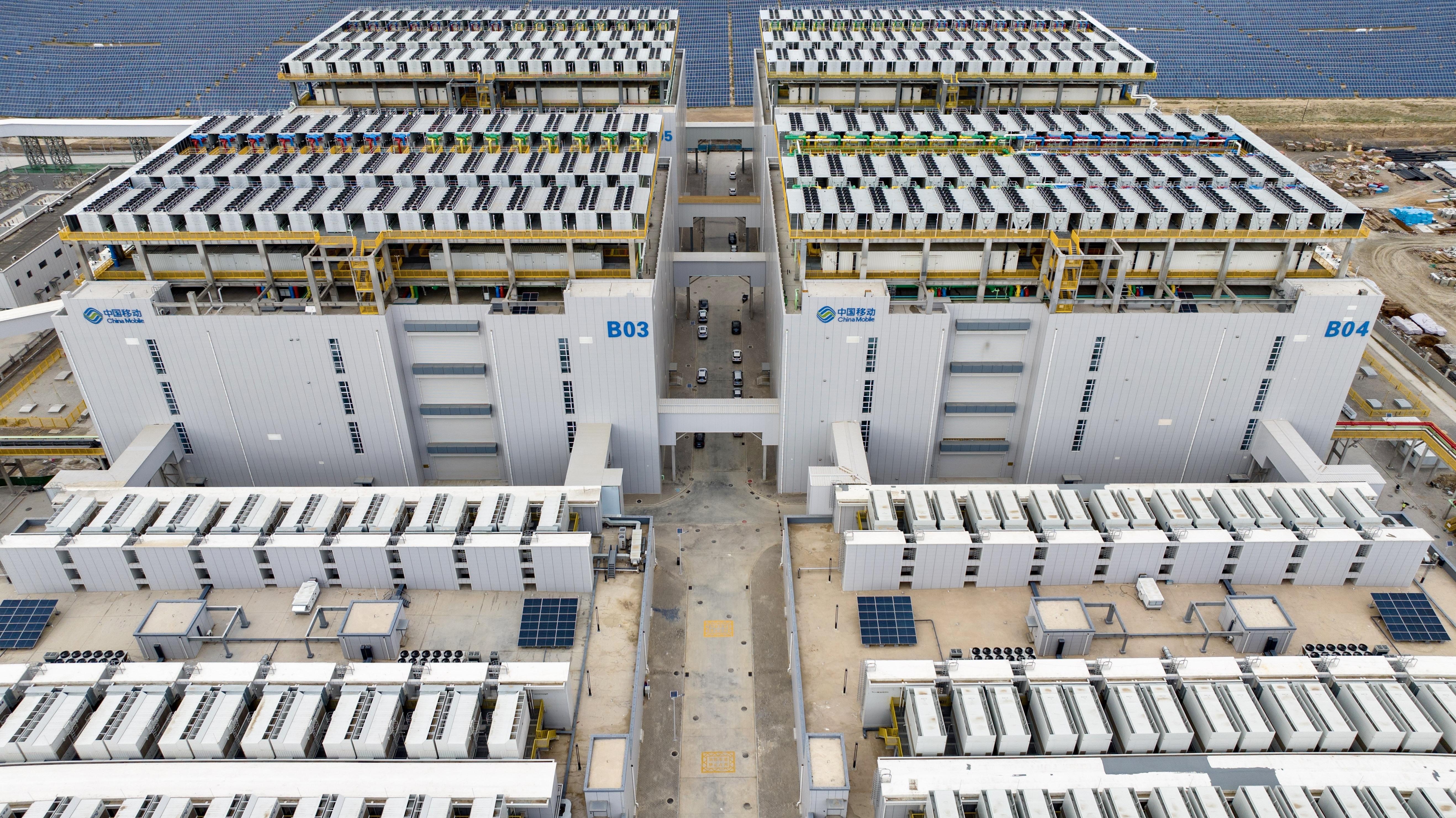
The operator has built two gigawatt-scale computing campuses, started three more in 2026 and plans another two in 2027. Modular construction, liquid cooling and power infrastructure are central to the expansion.
China Mobile is accelerating construction of large AI computing campuses as it seeks to expand computing capacity across China.
At the 2026 Mobile Network Conference in Guangzhou on November 6, Chairman Chen Zhongyue outlined a development program that would bring the company's gigawatt-scale intelligent computing campuses to seven by 2027.
According to Chen, China Mobile has already built two such campuses, started construction of three more in 2026 and plans to develop another two in 2027.
The company also expects to deliver 1.5 GW of capacity during 2026, according to conference reporting. The precise definition of that capacity has not been fully disclosed, and it should not be interpreted as confirmed operational IT load.
The announcement provides a closer look at how China Mobile intends to deliver very large computing facilities, particularly through standardized construction, high-density liquid cooling and coordination with electricity infrastructure.
Seven Campuses, but Not Seven Operational Gigawatts
China Mobile's development program has three stages:
Two gigawatt-scale computing campuses already built, according to the company.
Three additional campuses that began construction in 2026.
Two more campuses planned for 2027.
The target of seven refers to the number of campuses in the development program, not seven fully commissioned facilities operating at one gigawatt each.
The company has not disclosed a consistent breakdown of IT load, total electrical capacity and commissioned computing capacity for the individual campuses.
This distinction is important for infrastructure developers.
A campus described as gigawatt-scale may be designed for phased construction and equipment deployment. Its eventual electrical capacity, installed computing load and actual operating demand can differ considerably during development.
China Mobile also expects its intelligent computing capability to double in each of the next two years, based on its November 2026 outlook. That remains a forward-looking target rather than achieved growth.
Zhongwei Shows the Focus on Construction Speed
One of the most concrete examples cited by China Mobile was its computing hub in Zhongwei, Ningxia.
Chen reported that the company completed construction of a single 170,000-square-meter computing facility in three months and achieved capacity delivery within five months.
These are company-reported milestones. They do not establish that the entire campus, including all computing equipment and supporting systems, was fully operational within five months.
Nevertheless, the Zhongwei example helps explain China Mobile's emphasis on standardized modular design.
Large AI computing facilities involve multiple construction and equipment interfaces. Electrical systems, cooling infrastructure, server installation and network connectivity must be coordinated before capacity can be commissioned.
Factory-integrated equipment and repeatable engineering designs can reduce some on-site construction work, although their effectiveness depends on project conditions and execution.
For developers, the practical issue is how much of a facility can be standardized without compromising equipment compatibility, maintainability or commissioning requirements.
China Mobile's approach places these questions at the center of its campus expansion strategy.
Liquid Cooling Becomes Part of the Campus Design
China Mobile has said the gigawatt-scale campuses will adopt standardized modular designs and high-density liquid-cooling technology.
This is relevant to the deployment of dense AI computing clusters, where cooling equipment must be integrated closely with server architecture and electrical infrastructure.
The challenge extends beyond installing cooling distribution units or connecting liquid-cooled servers.
System performance depends on coolant flow, operating temperatures, redundancy arrangements and the response of cooling equipment to changing computing loads.
For engineering contractors and equipment suppliers, the opportunity lies in delivering integrated systems that can be commissioned and maintained reliably at scale.
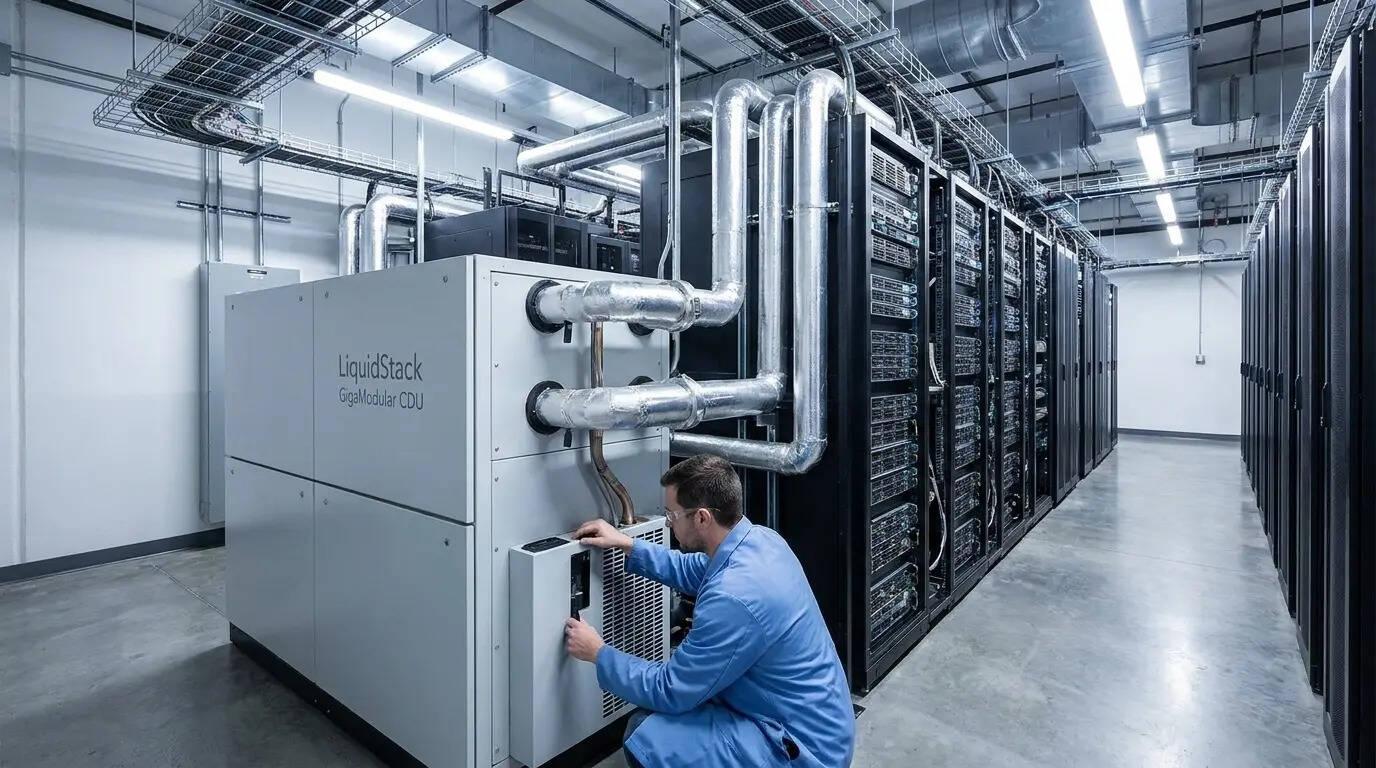
China Mobile has also identified integrated air- and liquid-cooling approaches as part of its wider technical development plans.
However, the conference disclosures do not provide detailed cooling configurations, measured energy-efficiency results or operating performance data for all seven campuses.
Those details will become more meaningful as individual projects disclose their equipment specifications and commissioning results.
Power Infrastructure Is a Critical Dependency
Electricity availability is another major factor in the development of large AI computing campuses.
At this scale, the construction schedule can depend on grid connection capacity, substations, electrical distribution equipment and the availability of reliable power.
China Mobile has identified coordination among power generation, grids, loads and energy storage, as well as direct renewable electricity connections, among the technologies it intends to develop or apply.
It has also discussed closer coordination between computing facilities, electricity systems and water resources.
These initiatives reflect the importance of energy infrastructure in large-scale computing development.
They do not mean that all seven campuses have secured grid connections, completed their power infrastructure or achieved a specified renewable electricity share.
For the equipment supply chain, future projects may create demand for transformers, switchgear, power distribution systems, cooling equipment and engineering services.
The scale and timing of those opportunities will depend on project-level procurement and construction decisions.
Computing Campuses Need Network Connectivity
China Mobile's campus program is linked to its wider computing-network strategy.
The company plans to expand 400G optical transport network capabilities, improve connectivity among national computing hubs and strengthen the scheduling of distributed computing resources.
This matters because the value of a large computing campus depends partly on how effectively its resources can be accessed and used.
High-capacity networks can connect computing facilities across different regions, while scheduling systems can help match available resources with customer workloads.
China Mobile's position as both a telecommunications operator and computing infrastructure provider gives it a role in coordinating these systems.
However, network connectivity alone does not establish that geographically distributed computing resources can operate as a single cluster for every workload. Latency, bandwidth, software architecture and application requirements remain important constraints.
The effectiveness of China Mobile's integrated approach will become clearer as additional facilities enter service.
What the Expansion Means for the Industry
China Mobile's plan illustrates the growing engineering demands associated with China's AI infrastructure expansion.
The company is seeking to combine large computing campuses with standardized construction, high-density cooling and a national communications network.
Its reported Zhongwei construction milestones suggest that delivery speed is already an important part of the strategy.
The remaining questions are largely project-specific.
How much of the planned 1.5 GW capacity will be delivered by the end of 2026? What electrical and IT capacity will individual campuses support? How quickly will new facilities move from construction to commissioned computing services?
Answers will depend on subsequent project disclosures, procurement awards and operating data.
For international data center developers and infrastructure suppliers, China Mobile's expansion is worth following as a large-scale example of how computing capacity, power infrastructure and cooling systems are being planned together.
The seven-campus target sets the direction. The actual capacity delivered, commissioned and used will provide the more meaningful measure of progress.
Sources & References
China Securities Journal — China Mobile's Gigawatt-Scale Campus Development Plans (November 7, 2026)
Caixin — China Mobile's Computing Investment and Seven-Campus Expansion (November 6, 2026)
Xinhua — China Mobile's Computing Network Strategy (November 9, 2026)
C114 — China Mobile's Computing Infrastructure and Zhongwei Construction Milestones (November 6, 2026)