
AI Infrastructure Review
China's AI Data Center Expansion: The Gap Between Capacity and Revenue
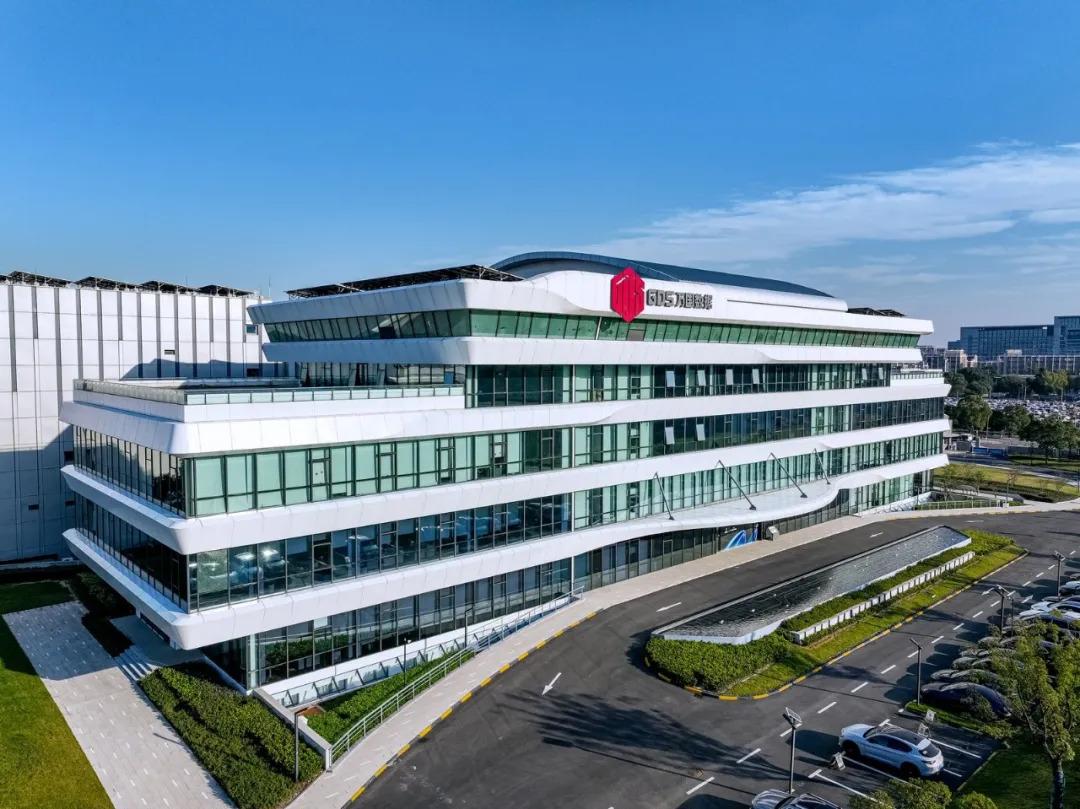
China is building AI computing infrastructure at considerable scale. But project announcements, completed data centers and revenue-producing capacity are different measures of progress. Public disclosures from one of China's leading data center operators show why the distinction matters.
China's Capacity Numbers Tell Only Part of the Story
China's AI infrastructure expansion is increasingly visible in official computing statistics, regional development plans and large data center announcements.
According to the Ministry of Industry and Information Technology (MIIT), China's intelligent computing capacity reached 2,185 EFLOPS (FP16) by the end of June 2026.
The figure illustrates the scale of China's computing infrastructure development. It does not establish how much of that capacity is being used by paying customers or generating revenue.
That distinction matters for developers and investors. A project can secure land and electricity, complete construction and install equipment before it begins earning the revenue originally anticipated. Even a signed customer agreement may not mean that all contracted capacity is already generating income.
The commercial question is therefore more specific than whether China has sufficient computing infrastructure.
How much of that infrastructure can be delivered to paying customers, and how quickly?
What GDS's Financial Disclosures Reveal
GDS Holdings, one of China's major data center developers and operators, provides a useful example because it reports capacity commitments, utilization and financial performance separately.
At the end of 2025, GDS reported:
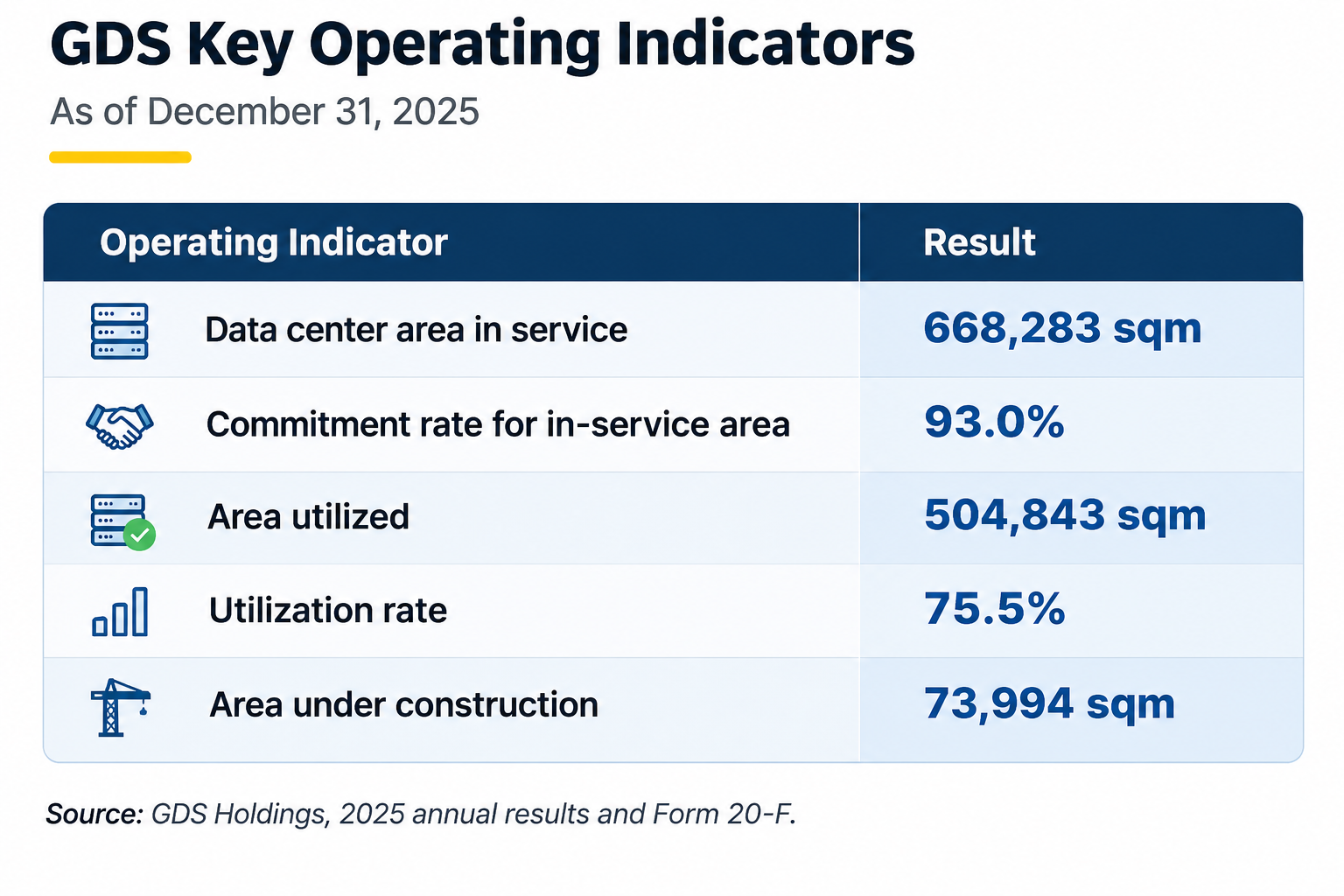
These figures describe different stages of commercial development.
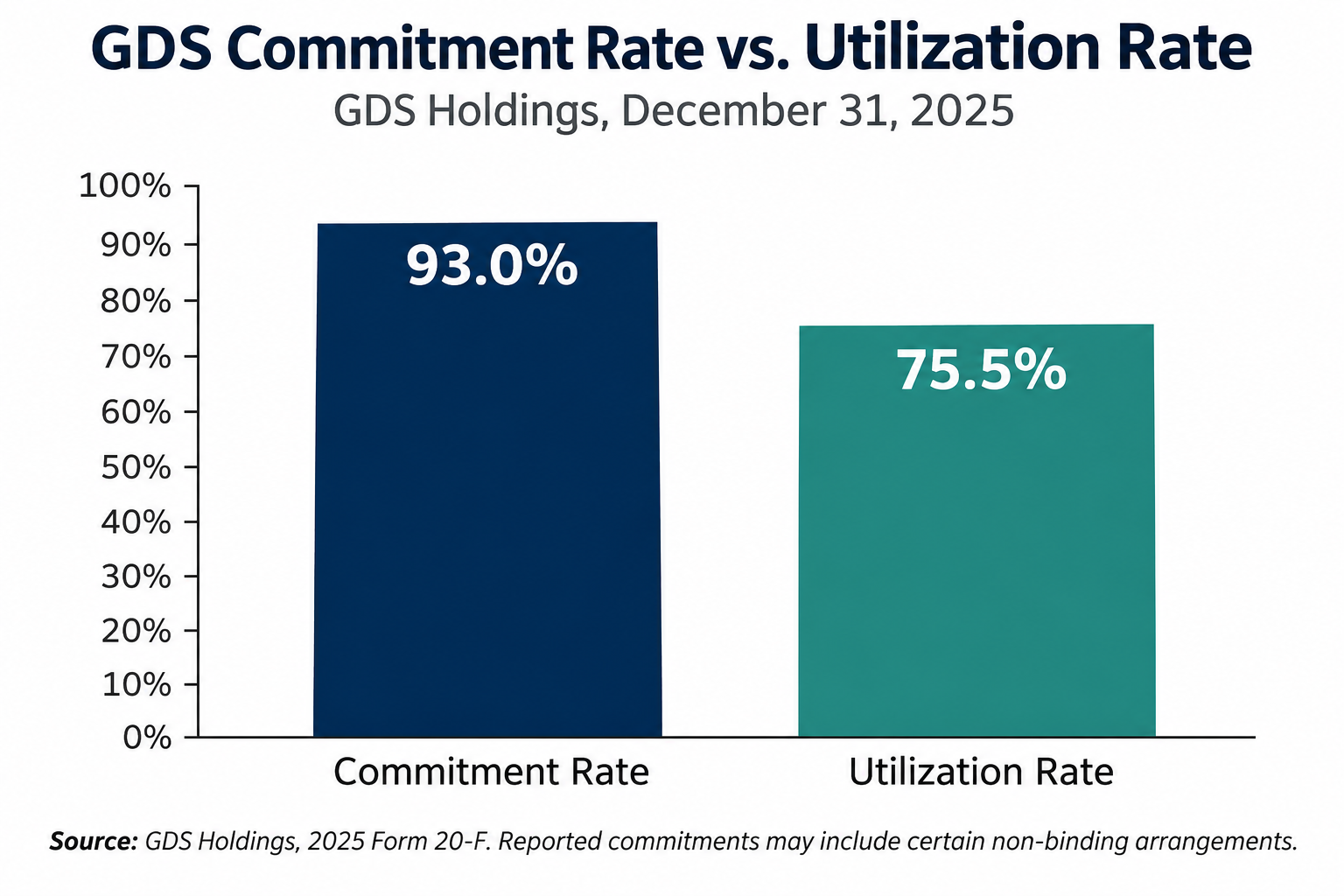
The 93.0% commitment rate indicates the proportion of in-service area covered by the company's reported customer commitments. The 75.5% utilization rate measures the proportion classified as utilized under its reporting definitions.
GDS defines utilized area as space that is committed to customers and generating revenue under the terms of customer agreements.
Importantly, GDS's reported commitment rate includes certain non-binding agreements, letters of intent and other customer confirmations. It should therefore not be interpreted as the proportion of capacity covered exclusively by enforceable customer contracts or guaranteed future revenue.
This distinction matters. Reported customer demand may be substantial, but customers do not necessarily move into facilities or begin using revenue-generating services immediately.
GDS reported 2025 net revenue of RMB 11.43 billion, up 10.8% year on year. The company attributed the increase primarily to growth in utilized area, including customers moving into previously committed space and new customers commencing service.
This provides a concrete illustration of how the conversion of customer commitments into delivered services contributes to revenue growth.
It does not establish a universal conversion rate for the Chinese data center market. GDS's operating model, customer mix, reporting definitions and portfolio differ from those of other operators.
The Commercial Gap Is Measurable
The difference between committed and utilized capacity is sometimes described simply as unused capacity. That description can be misleading.
For a wholesale data center operator, customers may reserve capacity well before deploying their equipment. Installation schedules, network readiness and technical acceptance procedures can determine when contracted space becomes revenue-generating.
A facility can therefore have strong reported commitments while still carrying a significant amount of capacity awaiting customer deployment.
GDS's 2025 annual filing reported 165,263 sqm of committed or pre-committed area not yet utilized at year-end, under its stated backlog definition.
That backlog is commercially relevant because it represents potential future service deployment. It is not equivalent to recognized revenue, and its eventual financial contribution depends on contract terms, customer delivery schedules and execution.
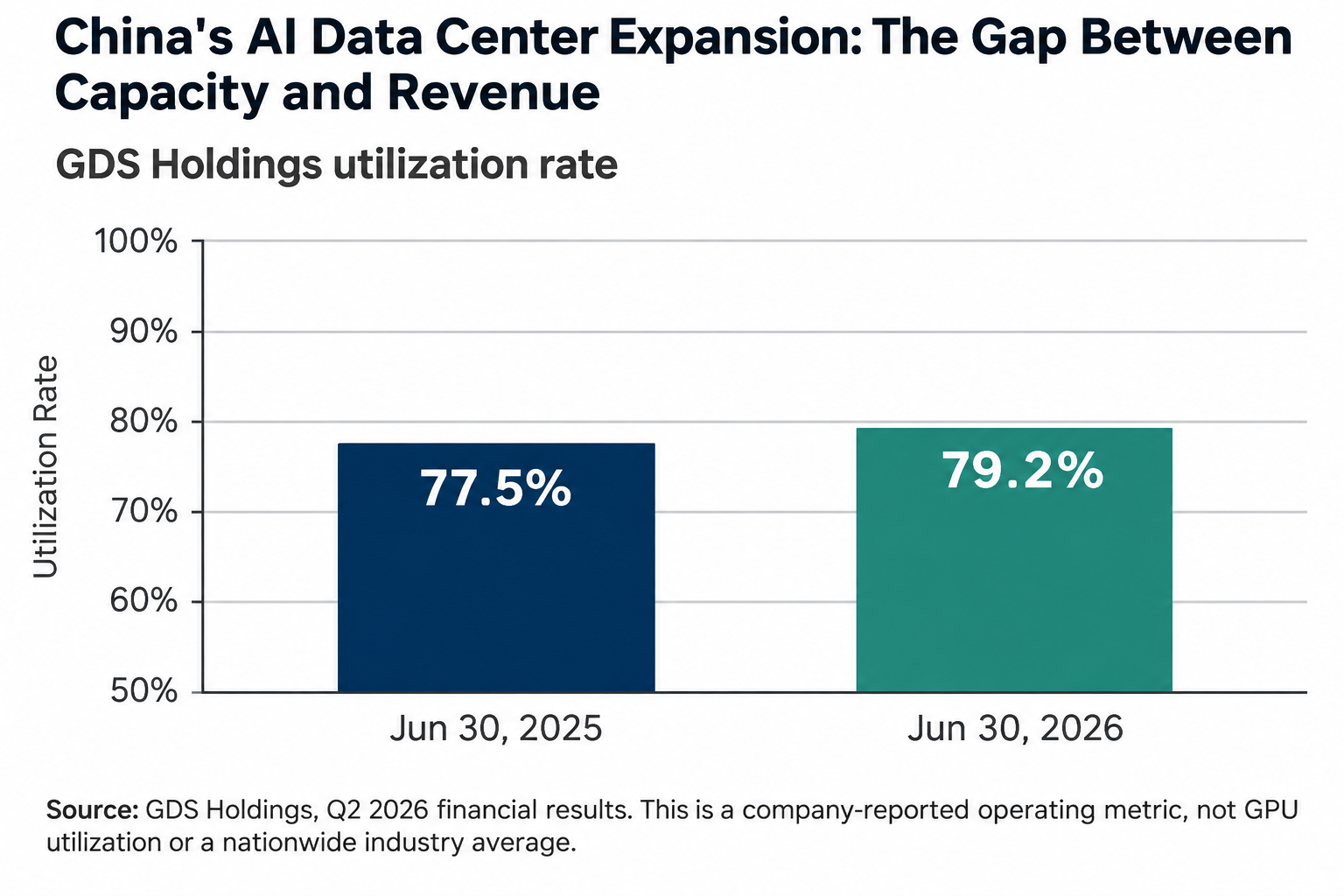
By June 30, 2026, GDS reported that its in-service area had increased to 684,977 sqm and utilized area to 542,236 sqm. Its utilization rate reached 79.2%, compared with 77.5% a year earlier.
The company's second-quarter 2026 revenue rose 6.5% year on year to RMB 3.09 billion.
These figures show continuing expansion in utilized capacity alongside revenue growth. They should not, however, be used to calculate a simple revenue-per-square-metre industry benchmark without adjusting for differences in pricing, power consumption, services and customer contracts.
Why the Business Model Changes the Meaning of Utilization
Not every AI infrastructure operator earns revenue in the same way.
For a data center infrastructure provider, the commercial relationship may revolve around space, power capacity, cooling, connectivity and operational services. Depending on the contract, revenue may begin when capacity is made available, accepted by the customer or otherwise meets specified billing conditions.
For a GPU infrastructure provider, the economics can be quite different.
A company that owns computing equipment and sells GPU-hours or other computing services must consider the amount of capacity actually sold, realized service pricing, workload scheduling, equipment depreciation and the useful life of its hardware.
A customer may have access to a reserved GPU cluster while using it intermittently. Whether that arrangement produces stable revenue depends on the pricing and reservation terms.
As a result, three frequently discussed metrics must remain separate:
Facility occupancy: How much data center space or rack capacity is occupied.
Computing utilization: How intensively the installed computing resources are used.
Commercial utilization: How much capacity or service activity is generating revenue under the applicable contracts.
A high figure in one category does not establish a high figure in the others.
This is why facility utilization metrics should not be used as proxies for GPU utilization or revenue generation.
Electricity Costs Are Only One Side of the Equation
In Research Brief 01, AI Infrastructure Review examined how electricity prices, PUE and operating assumptions influence the cost of running AI data centers in China.
Those factors remain important, but they do not determine commercial performance on their own.
A lower electricity price can improve the economics of a facility that has customers and is operating efficiently. It cannot compensate indefinitely for capacity that remains uncontracted or fails to become billable.
Location decisions also affect customer deployment.
A developer must consider whether the site can provide the required network connectivity, equipment support, operational reliability and delivery timetable. The relative importance of these factors varies by workload and customer.
Large-scale AI training, batch processing and latency-sensitive inference do not necessarily have the same location requirements.
For investors, the relevant comparison is therefore broader than the electricity price per kilowatt-hour.
It is the cost of delivering commercially usable capacity against the revenue and cash flow that capacity can reasonably support.
What Investors Should Examine Before Accepting a Capacity Target
Project announcements commonly emphasize planned electrical capacity, investment commitments or the number of GPUs expected to be deployed.
Those figures may describe the scale of a development opportunity. They do not, by themselves, establish the strength of the underlying business.
A more informative assessment starts with the capacity that can actually be delivered.
How much power is secured? Which phases have completed construction and commissioning? How much capacity is supported by binding customer contracts? When do the contracts permit billing to begin?
The financial assessment then needs to consider customer creditworthiness, pricing, contract duration, capital expenditure, depreciation, financing costs and cash collection.
For GPU service providers, hardware replacement cycles and the possibility of falling rental prices introduce additional risks.
These are not merely accounting distinctions. They determine how quickly infrastructure investment can begin producing economic returns.
China's efforts to coordinate computing resources may help improve visibility into available supply and support more efficient resource allocation. In September 2026, MIIT reported progress in nationwide computing-resource monitoring through the China Computing Power Platform.
Such coordination may improve the functioning of the market. It does not eliminate the need for commercially viable customers, enforceable agreements and reliable service delivery.
The Next Test Is Commercial Execution
China's AI infrastructure market is moving beyond a phase in which new capacity announcements alone provide a sufficient measure of progress.
Construction remains important. Power access, cooling technology and network infrastructure continue to influence where projects can be developed.
But the economic performance of those projects ultimately depends on what happens after capacity becomes available.
GDS's public disclosures illustrate why investors should distinguish between capacity in service, customer commitments, utilized capacity and reported revenue.
They also show the value of using company-defined operating metrics rather than treating every published utilization figure as interchangeable.
For China's expanding AI data center industry, the next competitive advantage may lie less in announcing the largest development pipeline and more in bringing contracted capacity into revenue-generating operation on time, at an acceptable cost and with sustainable customer demand.
That is where infrastructure scale begins to acquire measurable commercial value.
Research Methodology & Limitations
This report draws on official Chinese government publications and publicly disclosed financial and operating information from GDS Holdings.
The GDS figures relate to the company's reported portfolio and business operations. They are not presented as representative of all Chinese AI data centers or GPU computing-service providers.
Area-based metrics, electrical capacity, computing performance and revenue are different measures and should not be converted into one another without appropriate supporting information.
Reported customer commitments may include arrangements that are not legally binding, as described in the company's disclosures. Reported utilization reflects the company's own definitions.
The report does not estimate a nationwide revenue conversion rate or provide a forecast of industry profitability.
Sources & References
MIIT — Press Conference on Industrial and Information Technology Development, H1 2026. Official briefing
GDS Holdings — 2025 Annual Report, Form 20-F. SEC filing
GDS Holdings — Second Quarter 2026 Financial Results. Company disclosure
MIIT — Nationwide Computing Resource Monitoring, September 2026. Official report
Copyright & Reproduction Notice
This article is original content produced by AI Infrastructure Review. All rights to the original text and analysis are reserved. Third-party materials remain the property of their respective rights holders.
Unauthorized reproduction, republication, distribution, or commercial use of this article, in whole or in substantial part, without prior written permission is prohibited, except as permitted by applicable law.
Sharing a link to the original article is welcome.
© 2026 AI Infrastructure Review. All rights reserved.