
AI Infrastructure Review
ByteDance Weighs Brazil Data Center Expansion: Power, Connectivity and Investment Opportunities
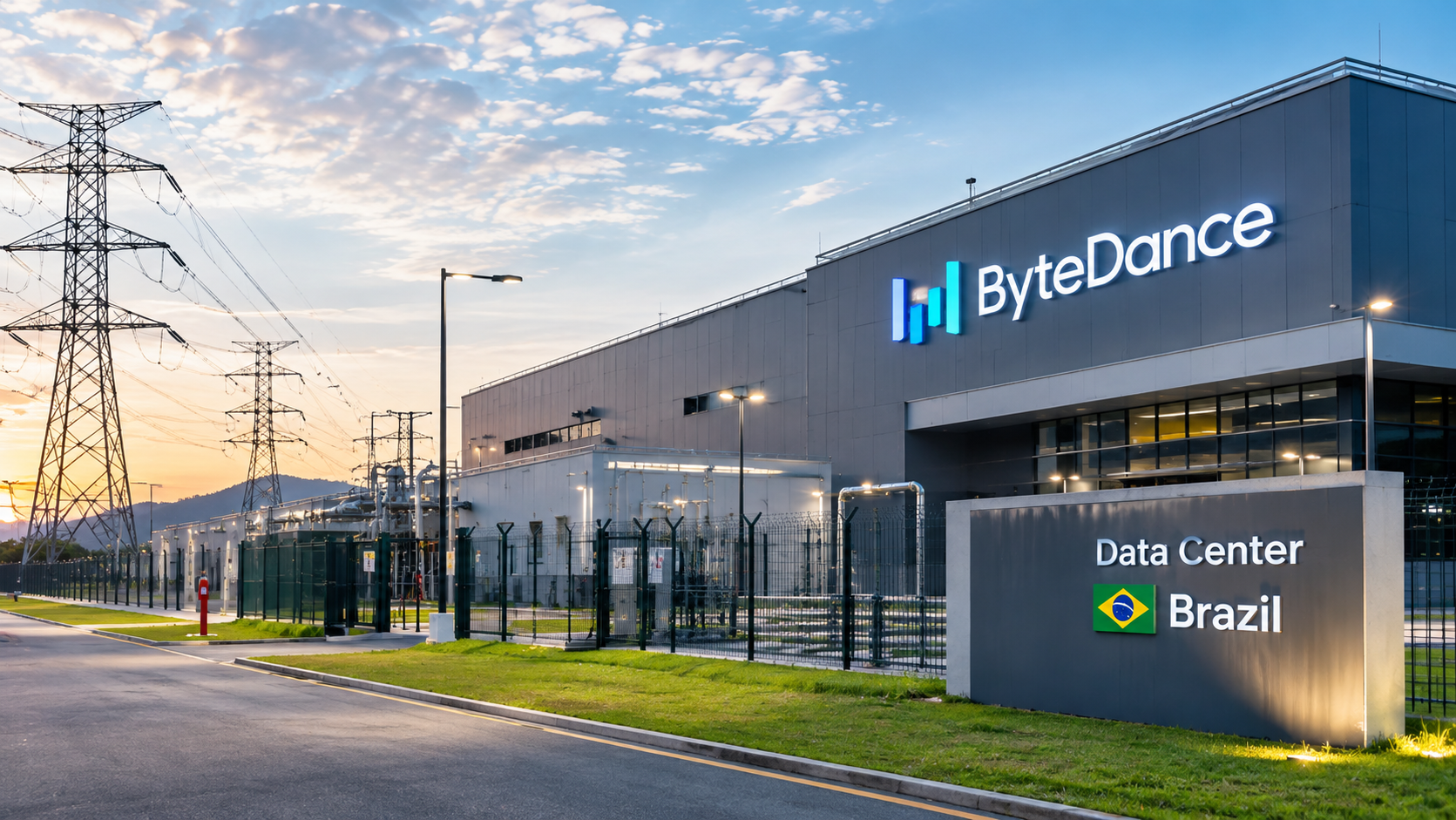
ByteDance is reportedly exploring additional data center capacity in Brazil. Its existing Pecém project shows how overseas computing demand is bringing together renewable energy, digital infrastructure and local investment.
ByteDance is considering a larger data center presence in Brazil, according to Bloomberg's November 6, 2026 report. The Chinese technology company is reportedly exploring a second phase at the Port of Pecém in Ceará, along with a separate facility that could serve Brazilian customers.
Neither expansion has been confirmed as a final investment decision.
The existing Pecém project is already under construction. Developed by Omnia, the data center platform backed by Patria Investments, its first phase is planned for approximately 200 MW of IT capacity, with a reported total electricity requirement of around 300 MW, according to Reuters.
Initial operations were previously reported to be targeted for Q3 2027.
The project raises three important questions for the global infrastructure industry: Why Brazil? How does electricity supply shape the investment? And where could Chinese technology companies' overseas computing demand create new business opportunities?
Key Project Facts
|
Item |
Reported Details |
|---|---|
|
Location |
Port of Pecém, Ceará, Brazil |
|
Data center developer |
Omnia (Patria Investments) |
|
Technology customer |
ByteDance |
|
First-phase IT capacity |
Approximately 200 MW planned |
|
Reported total electricity requirement |
Approximately 300 MW (planned) |
|
Renewable power agreement |
Approximately $2 billion over 20 years |
|
Target initial operations |
Q3 2027 (previously reported target) |
|
Additional expansion |
Reportedly under consideration |
Why Brazil? Energy, Connectivity and Local Partners
Brazil offers several advantages for large-scale computing infrastructure, particularly in its northeastern region.
Ceará has access to substantial renewable energy resources, while nearby Fortaleza is an established landing point for international submarine telecommunications cables.
For data centers serving overseas markets, this combination matters. Electricity availability influences project costs and delivery schedules, while international connectivity affects the ability to serve customers across borders.
Brazil also has local infrastructure developers and energy companies capable of organizing large projects.
At Pecém, Omnia is responsible for data center development, while Casa dos Ventos provides renewable electricity arrangements. Such partnerships allow overseas technology companies to work with firms familiar with local infrastructure, permitting and energy markets.
However, favorable geography alone does not guarantee competitive computing services. Network capacity, grid access, financing and customer demand remain essential to the investment case.
How Electricity Supply Shapes Project Economics
Power procurement is one of the defining features of the Pecém development.
In May 2026, Omnia and Casa dos Ventos signed a 20-year renewable electricity supply agreement valued at approximately $2 billion.
The arrangement involves wind generation assets in Ceará and Piauí, including the Ibiapaba and Dom Inocêncio projects.
Rather than treating electricity as a conventional operating expense to be arranged after construction, the developers have incorporated long-term power procurement into the investment structure.
This approach may improve visibility into energy costs and supply arrangements, although its financial benefits depend on contract terms, grid charges and actual operating performance.
Renewable electricity procurement also does not mean the data center can operate continuously on direct wind generation. Wind output varies, and reliable data center operations require appropriate grid and balancing arrangements.
For infrastructure investors, the significance extends beyond this project. Electricity availability and procurement terms are increasingly important in determining where large computing facilities can be developed and how their long-term economics are structured.
Where Infrastructure Investment Opportunities Are Emerging
ByteDance's reported plans illustrate how Chinese technology companies' overseas computing requirements could create opportunities across several infrastructure sectors.
As technology companies expand international services and deploy more computing-intensive applications, they may need capacity closer to overseas users. Such requirements can involve cloud services, data processing and AI-related workloads, although ByteDance has not publicly established the precise computing configuration planned for Pecém.
The potential investment opportunities span four areas.
Data center development and investment. Large overseas computing projects require suitable sites, construction financing, facility development and long-term operations. Local developers and infrastructure investors may participate through development partnerships, asset ownership or operating arrangements.
Power and electrical infrastructure. High electricity demand can support investment in renewable generation, grid connections, substations, power distribution and backup systems. Long-term supply agreements may also create opportunities for energy developers and capital providers.
Cooling, engineering and equipment. Computing facilities require cooling systems, electrical equipment, network infrastructure and specialist engineering services. The specific opportunities depend on the facility's design and computing density, rather than the headline project capacity alone.
Telecommunications and connectivity. Internationally oriented data centers need resilient terrestrial fiber networks, access to submarine cable systems and sufficient transmission capacity. These requirements can create demand for telecommunications operators and network infrastructure providers.
These are potential market opportunities, not confirmed ByteDance procurement contracts.
The broader implication is that overseas computing investment can generate demand across a local infrastructure ecosystem, extending well beyond servers and data center buildings.
For international suppliers and investors, understanding the technical and commercial requirements of Chinese technology companies may become increasingly important when evaluating projects in emerging computing markets.
What Could Limit Further Expansion?
The Pecém project also illustrates the risks involved in large-scale computing infrastructure development.
Bloomberg described the existing development as a $10 billion project, while earlier reporting cited an estimated R$200 billion for a broader phased development plan. These figures refer to different scopes and should not be interpreted as capital already spent or fully committed.
The project also faces a legal challenge. In September 2026, Brazil's Federal Public Prosecutor's Office and Federal Public Defender's Office sought to prevent operations from beginning until requirements concerning environmental impact assessment and prior consultation with the Anacé Indigenous community were addressed.
This is a legal request, not a final court ruling.
Construction progress, electricity reliability, network performance and confirmed customer demand will also influence the project's commercial viability.
Outlook
ByteDance's potential expansion in Brazil remains at an exploratory stage, but the existing Pecém development is already a substantial example of overseas computing infrastructure investment.
Brazil's renewable energy resources, international connectivity and local development capabilities have helped make the project possible.
Its next milestones will be the delivery of the first phase, progress on outstanding legal issues and any confirmed commitments to additional capacity.
For global data center developers, energy companies and infrastructure investors, Pecém is worth watching not only because of ByteDance's involvement, but because it shows how overseas computing demand can translate into investment across power, engineering, connectivity and digital infrastructure.
Sources & References
Bloomberg via Energy Connects — ByteDance Weighs Brazil Data Center Expansion (November 6, 2026)
Reuters — Omnia and Casa dos Ventos Energy Agreement (May 18, 2026)
Brazilian Federal Public Prosecutor's Office — Pecém Data Center Legal Action (September 10, 2026)