
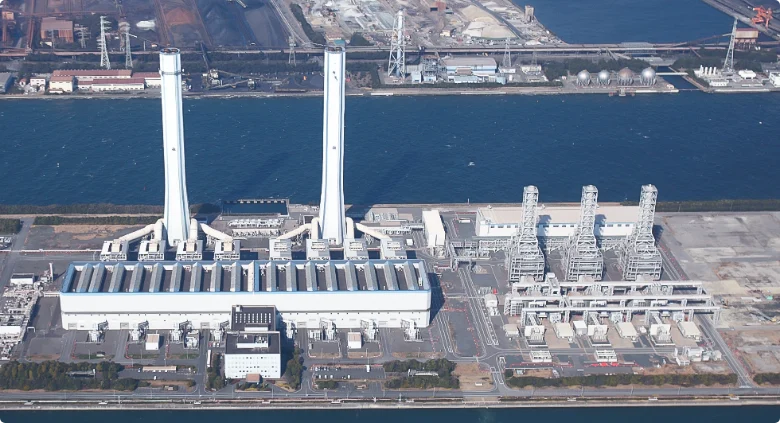
JERA, Dell Technologies and RHAELM are developing a standardized AI infrastructure model around a planned 400 MW project at JERA’s Chiba Thermal Power Station, using behind-the-meter power to shorten the path to capacity.
Japan’s latest AI infrastructure initiative begins with a resource that has become increasingly difficult to secure at scale: power that can be delivered on time.
JERA, Dell Technologies and UK-based RHAELM have signed a memorandum of understanding to develop a standardized framework for large-scale AI infrastructure in Japan.
The first implementation is planned around the Chiba Project, which JERA and RHAELM are jointly developing at JERA’s Chiba Thermal Power Station near Tokyo. Dell Technologies will provide the compute layer through Dell AI Factory.
The project is planned to be supported by power capacity of up to 400 MW. Total capital deployment across land, power infrastructure, facility construction and AI compute is expected to exceed $15 billion.
Operations are targeted to begin around 2028.
The planned up-to-400 MW project is already large enough to make the underlying development model worth examining.
Its defining feature is not simply its size.
It is where the project is being built.
Building compute beside generation
The Chiba project is planned at JERA’s existing thermal power station and will be behind-the-meter from an operating generation asset.
That matters because grid connection has become one of the longest lead-time items in large data center development.
JERA says the arrangement could allow capacity to be delivered years earlier than under a conventional grid-connected development schedule.
Instead of selecting a data center site first and then solving for electricity, the project starts with an existing source of large-scale power and places the AI infrastructure beside it.
For a project of this scale, that difference could materially affect the development schedule.
Power availability is therefore becoming more than an operating-cost consideration. For large AI projects, it can increasingly determine when compute capacity can enter service.
Four capabilities are being assembled around one site
The partnership also shows how the industry is reorganizing around the power constraint.
JERA brings the site, generation assets and an integrated LNG and power business.
Dell Technologies is providing the standardized compute layer through Dell AI Factory, including pre-integrated rack-scale infrastructure.
RHAELM is responsible for developing and delivering the data center infrastructure.
Apollo Global Management intends to serve as a strategic investment and financing partner for RHAELM on the Chiba project.
That brings power, compute, project development and capital into the same development framework.
The companies aim to reduce the need to design and integrate power generation, electrical infrastructure, cooling and AI compute independently on a project-by-project basis.
Their objective is to create a standardized, repeatable and scalable model.
Chiba is intended to be the first large-scale implementation of that approach.
If the model proves repeatable, JERA and RHAELM intend to examine other JERA sites across Japan.
This may be as important as the up-to-400 MW figure itself.
The constraint facing AI infrastructure is not only access to individual components. It is also the time required to integrate power, cooling, electrical systems and compute into an operating facility.
Standardization is an attempt to reduce that integration burden.
Gas and LNG are central to JERA’s proposed model
There is another feature of the project that should not be overlooked.
JERA says Japan’s ability to scale AI infrastructure rapidly will depend on reliable gas-fired generation and a resilient LNG value chain.
That is the company’s stated view, rather than a broader government policy conclusion.
JERA operates across fuel procurement, shipping, import infrastructure and power generation. For the Chiba project, that energy platform becomes part of the infrastructure proposition.
This makes the project different from AI data center announcements that focus primarily on renewable procurement, new nuclear generation or future grid expansion.
Here, existing thermal generation is being used as part of the strategy to accelerate compute deployment.
JERA also maintains a target of net-zero CO₂ emissions from its domestic and overseas businesses by 2050.
The project therefore illustrates how near-term requirements for firm power can operate on a different timetable from longer-term decarbonization goals.
For data center developers, that tension may become more visible as projects move from tens of megawatts toward several hundred megawatts.
The project aligns with Japan’s Watt-Bit initiative
Japan has already recognized that data center development cannot be planned independently from energy and telecommunications infrastructure.
The Ministry of Economy, Trade and Industry and the Ministry of Internal Affairs and Communications established a Public-Private Advisory Council on Watt-Bit Collaboration and later published Report 1.0.
The initiative is intended to promote coordinated development of electricity and telecommunications infrastructure as data-center demand grows.
JERA says the Chiba initiative is closely aligned with that direction.
The connection matters, although the two should not be treated as identical.
Watt-Bit is a broader national initiative focused on coordinating electricity and communications infrastructure with data center development.
Chiba is a commercial infrastructure project built around one specific approach: locating large-scale AI compute beside existing generation and developing the power and compute layers as part of the same framework.
It provides a concrete example of the kind of power-compute coordination Japan is trying to encourage.
The planned Chiba project is the starting point
The planned project is tied to a defined site, an identified power source, named infrastructure partners and a target for operations to begin around 2028.
That distinction matters because announced capacity is not the same as capacity that is under construction or fully financed.
The Chiba project gives the broader strategy a tangible starting point.
It also points to a change in how AI infrastructure is being designed.
For the first wave of large AI clusters, access to accelerators dominated much of the discussion.
Now another question is moving closer to the front of the investment decision:
How quickly can a developer secure and deliver hundreds of megawatts of dependable power?
At Chiba, the proposed answer is to move compute closer to existing generation.
If the model proves repeatable, it could offer one way to shorten the path to power that constrains data center development in many markets.
The next test is whether that model can scale beyond the first project — economically, operationally and within Japan’s longer-term energy transition.
Sources
- JERA — MoU with Dell Technologies and RHAELM — 2026-10-01.
- METI / MIC — Watt-Bit Collaboration Report 1.0 — 2025-06-12.